Waterproof Non-Slip Anti-Fatigue Mat for Kitchen & Desk
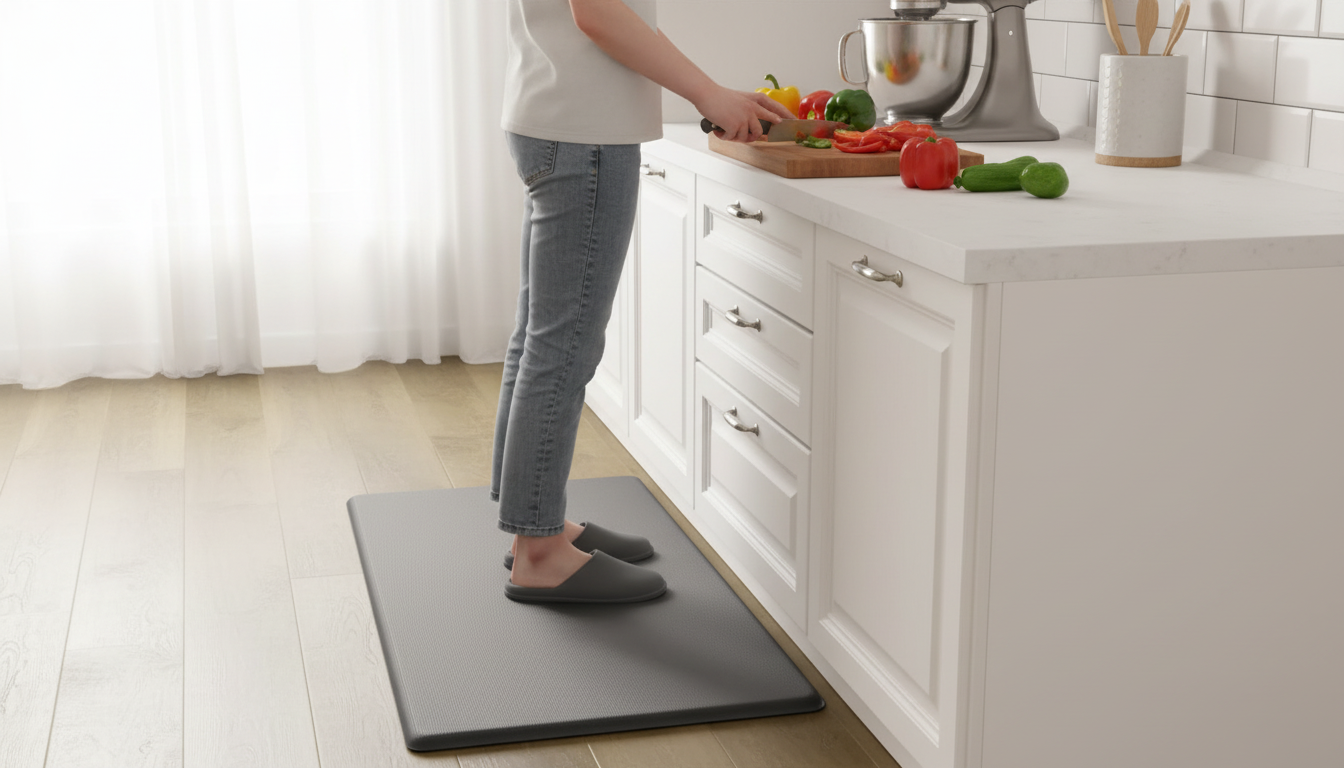
Non-Slip Anti-Fatigue Standing Mat for Kitchen and Office: Waterproof Comfort Where You Stand Most
Standing for long stretches at the sink, stove, laundry area, or a standing desk can leave feet and legs feeling sore and tired. A well-designed anti-fatigue mat adds cushioning underfoot, improves stability on slick floors, and creates a more comfortable work zone without getting in the way of daily routines. This guide breaks down what matters most—grip, cushioning, edge design, waterproof performance, and easy cleaning—so the mat works reliably in both busy kitchens and focused office setups.
Why Standing Feels Hard on Floors
Hard flooring provides minimal shock absorption, so pressure tends to concentrate on heels and the balls of the feet. When standing stays mostly stationary—washing dishes, chopping vegetables, or taking calls—muscles in the feet and lower legs keep working to hold posture, which can increase that “heavy legs” feeling over time.
A supportive mat helps by adding a compressible layer between your body and the floor. That layer can reduce impact and encourage small, natural shifts in stance (micro-movements) that make standing feel less rigid. For general ergonomics guidance in work zones, resources from NIOSH and OSHA emphasize practical ways to reduce strain during repetitive or sustained tasks.
What Makes an Anti-Fatigue Mat Feel Supportive
Not all cushioned mats feel the same. The most comfortable options typically compress slightly under body weight and then rebound when you shift, helping reduce pressure without feeling like you’re standing on a soft mattress. Thickness matters too: enough height for relief, but not so much that it feels unstable or becomes awkward near stools, step movements, or rolling chairs.
Surface texture is another piece of the comfort puzzle. A stable, lightly textured top helps footing when you turn, pivot, or step sideways—common motions while cooking, unloading a dishwasher, or moving between screens at a standing desk.
Comfort and Safety Checklist
| Feature | Why it matters | What to look for in daily use |
|---|---|---|
| Non-slip backing | Reduces sliding on tile/wood/laminate | Stays in place when stepping on/off and during quick turns |
| Anti-fatigue cushioning | Lowers perceived foot and leg fatigue | Supportive feel without a “sinking” sensation |
| Beveled edges | Helps prevent trips and catches | Smooth transitions when walking across the edge |
| Waterproof surface | Handles splashes and spills | Wipes clean without absorbing liquids |
| Easy-clean finish | Keeps the work zone hygienic | Quick wipe-down; resists staining from common kitchen messes |
| Durable top layer | Extends lifespan under frequent use | Resists cracking or peeling in high-traffic spots |
Non-Slip Stability for Kitchen and Office Floors
A dependable grip is especially important near sinks and dishwashers where water can reach the floor. Even small drips can reduce traction on smooth tile or sealed hardwood, so a non-slip backing that stays put when you step on and off is a practical safety upgrade.
In office spaces, stability matters in a different way: you might shift between sitting and standing, move a chair out of the way, or pivot to grab a notebook. A mat that creeps or curls at the corner can interrupt your workflow and raise trip risk.
Placement tips that improve grip
- Lay the mat fully flat—no folds, no curled corners.
- Avoid positioning it over grout ridges, uneven thresholds, or transitions between two floor types.
- Before placing the mat, confirm the floor is clean and dry so the backing can “grab” consistently.
Waterproof Performance and Low-Maintenance Cleaning
In real kitchens and home offices, spills happen—water at the sink, coffee at the desk, sauce splatter at the stove. A waterproof surface helps prevent liquids from soaking in, which can reduce odor buildup and makes routine cleanup faster.
Fit and Placement: Creating Comfort Zones
Kitchen comfort zones
Office comfort zones
Daily Use Tips for Better Comfort
Featured Pick: Waterproof Comfort for Kitchen and Office Standing Zones
If you want one practical upgrade that fits both cooking routines and work-from-home life, the Non-Slip Anti-Fatigue Kitchen & Office Standing Mat – Waterproof Comfort Rug is designed for extended standing in the places that see the most daily use. The non-slip design helps improve stability on smooth floors where turning and shifting are frequent, while the waterproof surface supports quick cleanup after everyday spills and splashes.
Quick Specs to Confirm Before Ordering
| Detail | Why it matters |
|---|---|
| Placement area (sink, stove, desk) | Ensures the mat size and layout match the main standing zone |
| Floor type (tile, wood, laminate) | Helps confirm the grip level is appropriate for the surface |
| Cleaning plan (wipe, mild soap) | Supports long-term hygiene and traction |
| Traffic level (low vs. high) | Guides expectations for durability in busy households |
More In-Stock Finds
FAQ
How do anti-fatigue mats help during long periods of standing?
They add a cushioned layer that compresses and rebounds under your weight, which can reduce pressure on feet and legs during tasks like dishwashing, cooking, or desk work. For best comfort, combine the mat with supportive footwear and take short movement breaks.
Can a waterproof standing mat be used near a kitchen sink?
Yes. A waterproof surface is designed to handle splashes and wipe clean quickly, which is ideal near sinks. For best grip, keep the floor underneath clean and dry, and wipe off soap or grease that could create slippery buildup.
How should a non-slip mat be cleaned without damaging the surface?
Use a damp cloth with mild soap and wipe gently, then dry the surface as needed. Avoid harsh abrasives or strong solvents so the finish stays smooth, easy to clean, and reliably grippy.









Leave a comment