Portable 1080P LED Projector: 9000 Lumens, Bluetooth, HDMI
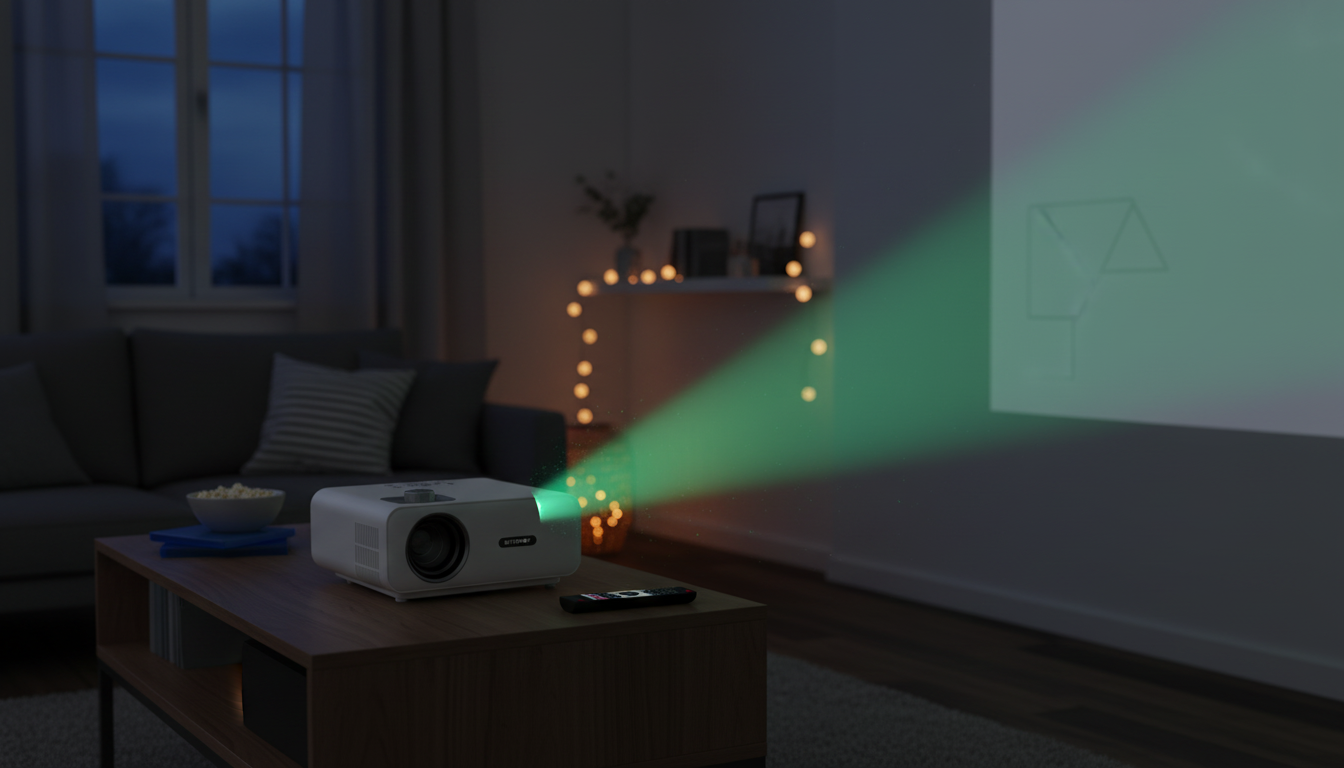
Portable Big-Screen Viewing Without the Permanent Setup
A compact projector can turn a living room, backyard, or small meeting space into a big-screen setup without permanent installation. This guide breaks down what matters most—brightness, resolution, Bluetooth audio, HDMI connections, and day-to-day usability—so it’s easier to decide if this model fits the space and devices it will be used with.
At a Glance: What This Projector Is Built For
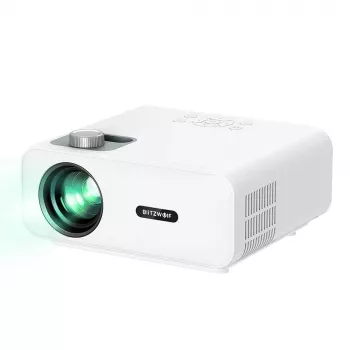
The Portable 1080P LED Projector with 9000 Lumens, Bluetooth 5.0 & HDMI Support is made for flexible, take-anywhere viewing—movie nights, casual gaming, presentations, and travel-friendly setups where a TV isn’t practical.
- Designed for portable use: quick movie nights, dorm rooms, outdoor viewing, and small-group presentations.
- 1080P-class viewing for sharper menus, cleaner text, and more detail than lower-resolution options.
- High advertised brightness (9000 lumens) aimed at clearer images in dim to moderately lit rooms; best results still come from controlling ambient light.
- Bluetooth 5.0 support to simplify audio with external speakers or a soundbar—especially useful outdoors.
- HDMI support for plug-and-play connections with streaming sticks, laptops, and game consoles.
Quick Specs Snapshot
| Feature | What to look for | Why it matters |
|---|---|---|
| Resolution | 1080P class | Sharper text and cleaner edges for movies, slides, and menus |
| Brightness | High lumen rating | Helps maintain visibility as ambient light increases |
| Wireless audio | Bluetooth 5.0 | More stable connections and better range versus older versions |
| Wired input | HDMI | Universal compatibility for modern media devices |
Brightness and Image Quality: Getting the Best Picture
Brightness claims can look impressive on a product page, but the real-world experience depends on how the projector is used. Room lighting, projection size, and even wall color can make a bigger difference than most people expect. For a deeper explanation of how brightness translates to usable viewing, ProjectorCentral has a helpful overview here: Projector Brightness Explained.
- Brightness in real rooms: Even with high lumen claims, perceived clarity and contrast change with ambient light and the color/finish of your wall or screen.
- Best environment: Dark rooms and nighttime outdoor use typically deliver stronger colors and deeper blacks.
- Projection size trade-off: A larger image spreads the same light across more area—moderate screen sizes often look punchier than max-size setups.
- Placement matters: A level, centered placement reduces distortion and helps keep the image sharp across the frame.
- Surface choice: A dedicated screen improves uniformity; a smooth matte wall can work, but texture and glossy paint can soften detail.
For the most “TV-like” results, start by dimming lights, keeping the projector square to the surface, and choosing a screen size that still looks bright in your space. Then adjust from there based on comfort and viewing distance.
Bluetooth 5.0 and HDMI: Connecting Phones, Speakers, Laptops, and Consoles
This projector’s two biggest convenience features are Bluetooth 5.0 for audio and HDMI for dependable video input. Bluetooth versions can differ in capability; if you want to reference the official standard, see the Bluetooth Core Specification. For wired compatibility basics, the HDMI specification overview explains what HDMI is designed to support.
- Bluetooth audio use case: Pair with a Bluetooth speaker or soundbar for louder, clearer sound than typical built-in speakers—especially helpful for backyard viewing.
- Latency considerations: Bluetooth can add slight delay; for faster-paced gaming, wired audio from the source device may feel more responsive.
- HDMI essentials: HDMI remains the simplest, most consistent connection for streaming sticks, set-top boxes, laptops, and game consoles.
- Streaming setup tip: Many streaming sticks need USB power; plan for a nearby outlet (or an appropriate power solution) so the stick stays powered during playback.
- Compatibility check: Confirm your device’s output type (HDMI, USB-C with video out, etc.) and have the right adapter if needed.
Connection Planning Checklist
| Device | Recommended connection | Notes |
|---|---|---|
| Streaming stick | HDMI | May require separate USB power |
| Laptop | HDMI | Set display mode (duplicate/extend) for best results |
| Game console | HDMI | Consider wired audio for lowest latency |
| Bluetooth speaker | Bluetooth 5.0 | Keep speaker within range and reduce obstacles |
Setup and Portability: Fast Start Without Fuss
Portability is only useful if setup is quick. A few small habits can make the image cleaner and the overall experience less finicky from day one.
- Start straight-on: Place the projector level and centered first; heavy keystone correction can reduce edge sharpness.
- Pick a practical distance: If the image looks dim, move the projector closer and shrink the image—smaller pictures usually look brighter and more contrasty.
- Keep cables tidy: A short HDMI cable plus a compact extension cord helps avoid trip hazards in living rooms and patios.
- Put audio near the audience: If using a Bluetooth speaker, place it closer to where people sit to improve clarity without cranking volume.
- Outdoor basics: Use a stable table/stand, block wind when possible, and plan power access before guests arrive.
Where It Fits Best: Real-World Use Cases
Care, Maintenance, and Common Fixes
More In-Stock Picks
- Ride On Push Car for Toddlers
- Amazing Song Pudding Bag
- 1:14 Scale RC Excavator with 22 Channels and 680° Rotation
FAQ
Is 9000 lumens bright enough for daytime viewing?
It depends on ambient light and screen size. Daytime viewing usually needs significant light control for the best results, while dim rooms or nighttime outdoor setups tend to look much clearer and more colorful.
Can Bluetooth 5.0 be used for sound while watching through HDMI?
Yes—HDMI typically carries video (and audio) from the source device while Bluetooth can send audio to a paired speaker or soundbar. If you notice audio delay, switching to wired audio from the source device can feel more responsive, especially for gaming.
What devices work best through HDMI on a portable projector?
Streaming sticks, laptops, and game consoles are the most straightforward HDMI sources. Phones and tablets may also work, but often require an adapter (such as USB-C to HDMI) and a compatible video-out mode.







Leave a comment