-
Shop
- Adidas
- Advanced Technologies
- AI Skills for Creators & Freelancers
- AI Client Management
- AI Ethics
- AI Mindset
- AI Tools & Prompts
- AI Writing & Content Creation
- Audio, Voice & Music
- Design & Visual Creation
- Email, Messaging & Communication
- Freelancing & Business
- Marketing, Ads & Conversion
- Productivity, Workflow & Automation
- SEO & Search Optimization
- Social Media Content & Growth
- Strategy, Planning & Analytics
- Video Creation & Editing
- Beauty
- Best-Sellers
- Car Accessories
- Car Buying & Ownership
- Confidence
- Dating & Social Skills
- Digital Resources
- Education & Learning
- Family & Parenting
- Fashion
- Accessories
- Alexander McQueen
- Bags
- Bags & Wallets
- Balenciaga
- Belts
- Blazers
- Bottega Veneta
- Brunello Cucinelli
- Burberry
- Chanel
- Chloé
- Dior
- Dolce & Gabbana
- Dresses
- Etro
- Fendi
- Gucci
- Hats & Hair Accessories
- Hoodies & Sweatshirts
- Jewelry
- Jil Sander
- Keychains
- Kiton
- Luggage
- Miu Miu
- Off-White
- Outerwear
- Prada
- Rick Owens
- Saint Laurent
- Shoes
- Socks & Tights
- Sweaters & Cardigans
- The Row
- Tom Ford
- Tops & Shirts
- Valentino
- Valentino Garavani
- Versace
- Vivienne Westwood
- Watches
- Fashion Accessories
- Furniture
- Gadgets
- Health & Beauty
- Health & Wellness
- Home & Garden
- Home Styling & Organization
- Home Supplies
- Kids & Babies
- Kitchen Best-Sellers
- Parenting & Child Development
- Patio, Lawn & Garden
- Personal Growth
- Personal Style & Fashion
- Pet Care
- Pet Lifestyle & Wellness
- Pet Supplies
- Pets
- Smart Home Living Guides
- Sport & Outdoors
- Stress Relief & Relaxation
- Super Deals
- Travel
- Travel & Adventure
- Wealth
- Wellness
Magnetic Pipe Track Set: Taller Builds, Smoother Runs
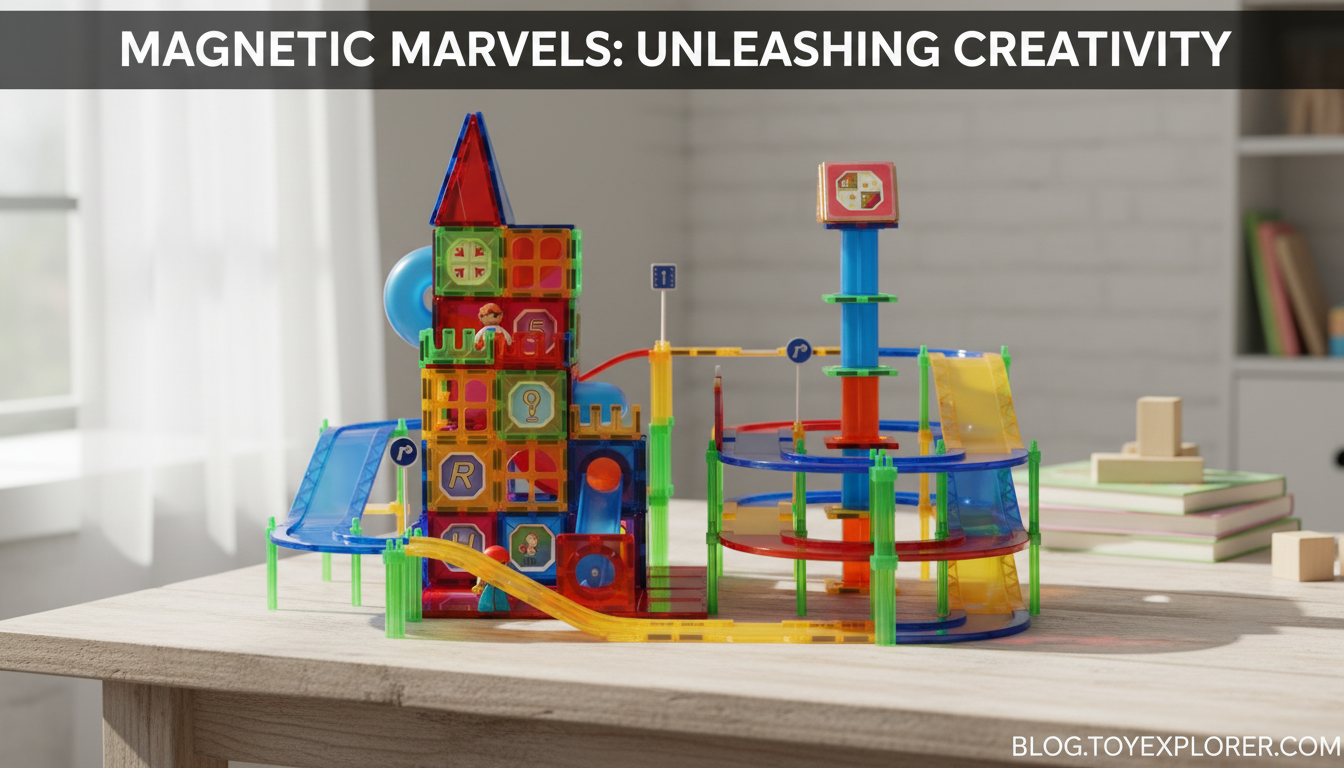
Magnetic Pipe Track Building Set: Fast Builds, Big Runs, and Hands-On Learning
A magnetic pipe track set turns open-ended building into action: connect pieces in seconds, experiment with slopes and turns, then watch the run come alive. The best sets make it easy to prototype a route, test it, tweak one joint, and immediately see the difference in speed and reliability. Below are the details that matter most—what’s in the box, what makes builds stable, and simple ways to get longer, smoother runs that keep kids coming back.
What Makes a Magnetic Pipe Track Different
- Quick-connect joins: Magnetic connections “snap” into place, so building feels more like assembling ideas than wrestling with parts.
- 3D routing is the point: Pipe-style segments encourage height—drops, spirals, bridges, and switchbacks—rather than only flat layouts.
- Build-and-test gameplay: Trial, error, and iteration happen naturally when a run stalls, bounces, or speeds up unexpectedly.
- Great for solo or group play: One builder can refine the route while another reinforces supports, which keeps collaboration smooth.
What’s Typically Inside the Box
- Magnetic structural pieces for frames and support towers.
- Curved and straight pipe segments that guide a ball/object through the run.
- Connectors, bases, or pillars that add height and reduce wobble.
- Action elements (often): funnels, drops, splitters, ramps, or speed sections that change the pacing and problem-solving.
- Storage considerations: if a bin or bag isn’t included, a lidded container helps prevent “missing piece” frustration later.
Key Features to Compare Before Buying
Two sets can look similar but play very differently. The difference usually comes down to connection strength, track fit, and whether the set includes enough supports to build upward without constant resets.
Feature checklist for choosing a set
| Feature | Why it matters | What to look for |
|---|---|---|
| Connection strength | Prevents collapses in taller structures | Magnets that click into place and resist twisting |
| Track smoothness | Keeps the run moving without stalls | Tight joints, consistent inner diameter, minimal seams |
| Support options | Enables bigger builds in small spaces | Pillars, bases, and angled supports for stable height |
| Action pieces | Adds variety and problem-solving | Funnels, splitters, drops, spirals, and speed ramps |
| Cleanup & storage | Reduces missing pieces and wear | A dedicated bin/bag or stackable organization |
Age and Skill Fit: Getting the Best Experience
- Younger builders: Larger components and short, repeatable runs work best. Quick rebuilds keep attention on the “try again” loop rather than long setup time.
- Older kids: Taller structures and more complex routing are where the fun ramps up—especially when they can diagnose alignment, transitions, and speed control.
- Mixed ages: Start with a reliable base loop, then add a “challenge module” (funnel, split, or drop). That lets everyone contribute without the whole run failing at once.
- Group play tip: Assign roles—one person manages supports and stability, another designs the route, and a third tests and reports where it stalls.
For safety and age appropriateness, it helps to follow established toy guidance such as the American Academy of Pediatrics’ recommendations on selecting toys for young children: https://www.healthychildren.org/English/ages-stages/baby/Pages/Selecting-Appropriate-Toys-for-Young-Children.aspx.
Build Ideas That Keep Play Fresh
- Speed test: Build two routes with different slopes. Time each run and adjust one variable at a time (drop height, number of curves, or a straight segment).
- Checkpoint challenge: Add a funnel or switchback that must be cleared without stopping. If it fails, rebuild only that section.
- High-rise tower: Use shorter segments up high and put heavy action pieces lower to reduce sway.
- Theme build: Make a “city route” with bridges and tunnels using books or blocks as terrain, then route the pipe track through it.
- Repair mission: Intentionally create a tricky seam, then tune the alignment until you can run multiple times in a row without a stall.
Troubleshooting: When the Run Slows or Stops
For ongoing safety awareness, it’s also smart to periodically review toy recalls from the U.S. Consumer Product Safety Commission: https://www.cpsc.gov/Recalls?tabset=on&search_combined_fields=toy.
Care, Storage, and Safety Basics
Magnetic Pipe Track Building Set: Product Snapshot
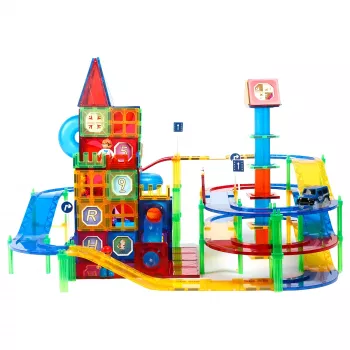
If you’re looking for a centerpiece building toy that rewards experimentation, the Magnetic Pipe Track Building Set is designed for repeatable builds and quick reconfiguration—ideal for testing height, turns, and route design over and over.
Current listing details
| Item | Details |
|---|---|
| Product | Magnetic Pipe Track Building Set |
| Price | 287.67 USD |
| Availability | In stock |
| Product page | https://vintagelle.com/magnetic-pipe-track-building-set/ |
More In-Stock Favorites for Active, Hands-On Play
- Ride On Push Car for Toddlers for indoor/outdoor movement play and simple steering practice.
- 1:14 Scale RC Excavator with 22 Channels and 680° Rotation for controlled, skill-building play with realistic motion and coordination.
FAQ
What age is a magnetic pipe track building set best for?
Most kids do well once they can connect pieces with intention and tolerate small rebuilds, often around early elementary age and up. Younger children can enjoy it too with larger, simpler layouts and supervision if small parts are included.
How can a build be made taller without collapsing?
Start with a wide base, then add supports close to curves and transition points where wobble is most likely. Keep heavier action pieces lower, and build in stacked sections—check stability every few layers before going higher.
What causes the ball/run to get stuck, and how is it fixed?
The most common causes are misaligned joints, small gaps, or a too-steep drop leading directly into a curve. Reseat and rotate the joints until seams are flush, add a short straight after drops, and move the build to a hard, level surface to reduce wobble.
Recommended for you

Was this article helpful?
Yes
No








Leave a comment