-
Shop
- Adidas
- Advanced Technologies
- AI Skills for Creators & Freelancers
- AI Client Management
- AI Ethics
- AI Mindset
- AI Tools & Prompts
- AI Writing & Content Creation
- Audio, Voice & Music
- Design & Visual Creation
- Email, Messaging & Communication
- Freelancing & Business
- Marketing, Ads & Conversion
- Productivity, Workflow & Automation
- SEO & Search Optimization
- Social Media Content & Growth
- Strategy, Planning & Analytics
- Video Creation & Editing
- Beauty
- Best-Sellers
- Car Accessories
- Car Buying & Ownership
- Confidence
- Dating & Social Skills
- Digital Resources
- Education & Learning
- Family & Parenting
- Fashion
- Accessories
- Alexander McQueen
- Bags
- Bags & Wallets
- Balenciaga
- Belts
- Blazers
- Bottega Veneta
- Brunello Cucinelli
- Burberry
- Chanel
- Chloé
- Dior
- Dolce & Gabbana
- Dresses
- Etro
- Fendi
- Gucci
- Hats & Hair Accessories
- Hoodies & Sweatshirts
- Jewelry
- Jil Sander
- Keychains
- Kiton
- Luggage
- Miu Miu
- Off-White
- Outerwear
- Prada
- Rick Owens
- Saint Laurent
- Shoes
- Socks & Tights
- Sweaters & Cardigans
- The Row
- Tom Ford
- Tops & Shirts
- Valentino
- Valentino Garavani
- Versace
- Vivienne Westwood
- Watches
- Fashion Accessories
- Furniture
- Gadgets
- Health & Beauty
- Health & Wellness
- Home & Garden
- Home Styling & Organization
- Home Supplies
- Kids & Babies
- Kitchen Best-Sellers
- Parenting & Child Development
- Patio, Lawn & Garden
- Personal Growth
- Personal Style & Fashion
- Pet Care
- Pet Lifestyle & Wellness
- Pet Supplies
- Pets
- Smart Home Living Guides
- Sport & Outdoors
- Stress Relief & Relaxation
- Super Deals
- Travel
- Travel & Adventure
- Wealth
- Wellness
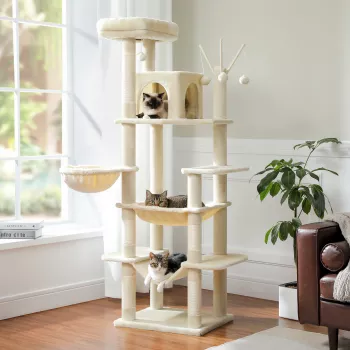
Large Cat Tree with Oversized Hammock & Scratch Posts
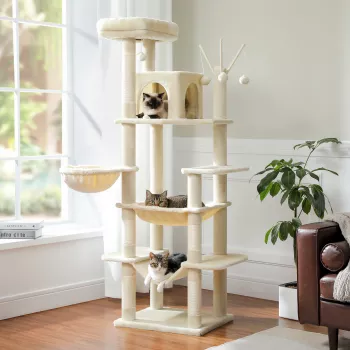
Large Cat Tree with Super Big Hammock and Scratching Posts for Indoor Cats
Indoor cats do best when their space supports natural instincts: climbing up to survey a room, settling into a secure nap spot, and scratching to stretch and maintain their claws. A large cat tree with a super-sized hammock and multiple scratching posts brings those needs together in one dedicated station—helping your cat stay active, relaxed, and less interested in using the sofa as a scratching pad.
What a Cat Tree Should Provide Indoors
A well-chosen cat tree can function like a “home base” for indoor life. The most useful setups don’t rely on one feature—they combine movement, comfort, and appropriate scratch zones so your cat has reasons to return throughout the day.
- Vertical territory for climbing, perching, and confidence-building—especially helpful in multi-pet homes where cats may appreciate an elevated escape route.
- A stable rest spot that supports curled-up sleep and full-body lounging without wobble.
- Scratching surfaces that help maintain claw health and reduce damage to carpets and furniture. (For behavior basics, see guidance from Humane World for Animals.)
- Activity variety (levels, posts, perch changes) that reduces boredom during long indoor days and keeps cats cycling between play and rest.
Why a Super-Sized Hammock Matters
Many cat trees include small cradles that look cute but don’t get used much—often because they feel cramped or unstable. A truly roomy hammock changes that dynamic and can become the most-requested seat in the house.
- Supports relaxed, full-body lounging and can feel more secure than narrow platforms because the sling hugs the body.
- Encourages better habits by giving your cat a “best seat” that’s not your couch, bed, or clean laundry pile.
- Helpful for larger cats and sprawlers, and it can serve as a shared “rotation spot” in multi-cat homes when cats take turns.
- Placement tip: set the tree near a window for enriching views, but avoid direct heat sources that can over-warm hammock fabric and make it less inviting.
Scratching Posts: Placement, Texture, and Use
Scratching is normal cat behavior, not misbehavior—cats scratch to mark, stretch, and maintain claw condition. The trick is making the right scratching option easy and rewarding. The ASPCA recommends focusing on redirection rather than punishment, which is where a multi-post tree shines.
- Multiple posts increase success because cats have preferences for angle and height—many love a vertical, full-body stretch scratch.
- Start where the habit already exists: place the tree near a current scratch “hot spot” first, then gradually move it if needed.
- Make it appealing: sprinkle catnip, drag a wand toy around the posts, and reward appropriate scratching with a treat or praise.
- Inspect the wrap regularly: frayed material can still be usable, but trim loose strands that could snag paws or nails.
Quick Comparison: Features That Affect Daily Use
Use the checklist below to decide what matters most for your cat’s size, age, and activity level. Stability and post height tend to matter more than extra add-ons.
| Feature | Why it matters | What to look for |
|---|---|---|
| Base size and weight | Reduces wobble and tipping during jumping | Wide base; solid, balanced frame |
| Hammock size | Comfort for lounging; better for larger cats | Deep, supportive sling; secure attachment points |
| Scratching post count | More scratch options reduces furniture scratching | Multiple posts across levels |
| Post height | Enables full-body stretch scratches | At least one tall post for an extended reach |
| Platform spacing | Easier climbing and safer descents | Step-like levels; not too far apart |
| Material and upkeep | Longevity and cleanliness | Durable wrap; wipeable surfaces where possible |
Stability and Safety for Active Climbers
Cats don’t just climb—they launch. A stable setup helps prevent tip-overs and makes your cat more confident using the tree at speed.
- Choose a location with clearance so cats can jump on/off without clipping furniture edges.
- For smooth floors (tile, laminate), add a non-slip mat underneath to reduce sliding during takeoff.
- For high-energy or multi-cat homes, a wall anchor (when compatible) can add peace of mind and reduce wobble.
- Avoid risky “launch pads” by keeping the tallest perches away from shelving that invites leaps into unsafe zones.
Sizing Guidance for Kittens, Adults, and Larger Cats
For more ideas on enriching an indoor environment, International Cat Care offers practical, cat-centered recommendations.
Featured Option: Large Cat Tree with Super Big Hammock & Scratching Posts
If the goal is one dependable station that covers lounging and scratching in a single footprint, a hammock-forward design is a smart pick. Large Cat Tree for Indoor Cats with Super Big Hammock & Scratching Posts is built around a generously sized hammock for naps and relaxation, paired with scratching posts that support everyday stretch-and-scratch behavior.
Setup and Care Tips to Keep It Popular
Also in the Shop
FAQ
Where should a cat tree with a hammock be placed in an apartment?
A stable corner near a window works well for enrichment while keeping the tree out of high-traffic doorways. Make sure jump paths are clear, and use a non-slip mat if the floor is smooth.
How can scratching posts on a cat tree help protect furniture?
They make it easier to redirect scratching to an approved surface—especially when the tree starts near your cat’s current scratching spot. Encourage use with catnip or play, reward good choices, and ensure at least one post is tall enough for a full-body stretch.
Is a large hammock suitable for more than one cat?
It depends on your cats’ size and personalities, but a larger hammock can support sharing or turn-taking more comfortably than a small cradle. Multiple resting spots on the same tree also helps reduce competition.
Recommended for you
Was this article helpful?
Yes
No








Leave a comment