Indoor Cat House with Removable Flower Bed: Cozy & Clean
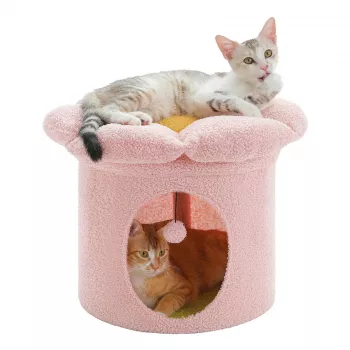
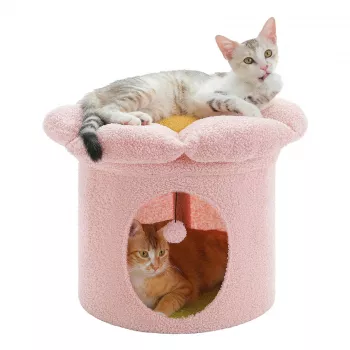
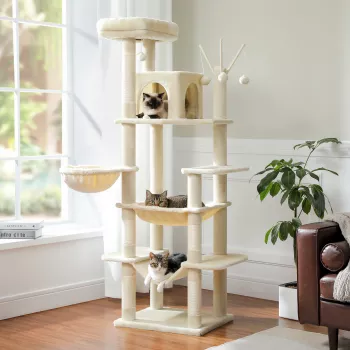
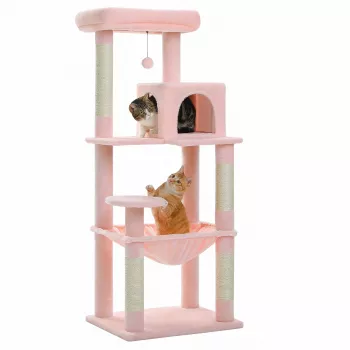
Large Indoor Cat House with Removable Flower Bed
A cozy indoor hideaway can reduce stress, support better rest, and give cats a consistent “safe zone” away from household traffic. A cat house with a removable flower-shaped bed adds a soft lounging surface while making cleaning and seasonal swaps easier—especially helpful for homes that want comfort without sacrificing neatness.
What makes an indoor cat house feel truly “safe”
Many cats relax fastest in spaces that feel predictable and protected. A well-designed indoor cat house creates a calm boundary that signals “this spot is mine,” even in busy households.
- Enclosed sides: Covered walls help limit visual stimulation and muffle some everyday noise, which can be soothing for cautious or easily startled cats.
- A defined entrance: One clear doorway acts like a simple “gate,” making it easier for cats to monitor what’s happening outside without feeling exposed—useful in multi-pet homes.
- A dedicated rest spot: When cats have a reliable nap zone, they’re often less likely to claim laundry piles, couch corners, or human beds as their default.
- Smart placement: Quiet corners away from litter boxes and noisy appliances (like washers, dryers, or HVAC vents) tend to get the most consistent use.
Removable flower bed: comfort plus easier upkeep
A removable cushion changes the whole ownership experience: it separates the “structure” from the “soft parts,” so you can keep things fresh without turning cleaning day into a project.
- Split cleaning tasks: Wash or refresh the bed more often, while wiping down the house itself as needed.
- Faster during shedding seasons: Swapping the bed out can be quicker than deep-cleaning an entire enclosed house—especially if your cat’s coat cycles heavily.
- Target the hair-and-dander hotspot: The cushion usually collects the most fur, so being able to detach it makes airing out or replacing that piece simpler.
- Flexible lounging: For cats that sometimes prefer open naps, the flower bed can be placed nearby as a standalone “daytime” spot.
Comfort and support: what to look for in the sleeping surface
For many cats, the cushion is the deciding factor. If it feels good, the house gets used. If it doesn’t, the house becomes decor.
- Cushion thickness and resilience: Supportive padding can matter for older cats or cats that avoid hard floors and thin mats.
- Surface feel: Plush textures often encourage kneading and settling; smoother fabrics may hold less hair and can be quicker to wipe clean.
- Edge shape: Raised “petals” or bolsters provide a chin rest and a tucked-in feeling that many cats seek out for deeper sleep.
- Warmth: Indoor houses help retain body heat. In colder rooms, a light blanket can boost coziness (as long as your cat enjoys it and it doesn’t overcrowd the entry).
Size, entry design, and where to place it
Even the softest bed won’t win your cat over if the space feels cramped or awkward to enter. Think in terms of “easy in, easy turn, easy nap.”
- Roomy interior space: Your cat should be able to turn around comfortably and switch positions without pressing against the walls.
- Entry height and width: A generous opening helps larger cats and makes access friendlier for seniors who don’t want to crouch or hop.
- Place it where your cat already relaxes: A favorite window area, a quiet hallway nook, or a bedroom corner typically works better than a brand-new “assigned” location.
- Keep distance from the litter box: Many cats prefer a clear separation between rest zones and toilet areas.
Cleaning routine that keeps it fresh (without stressing the cat)
Cats can be scent-sensitive, so the goal is “clean enough to be pleasant” without removing every familiar smell at once.
For additional enrichment ideas that support calmer indoor routines, resources like the ASPCA’s feline enrichment guidance and the Cornell Feline Health Center can be helpful reference points.
Helping a cat actually use the house
At-a-glance details and buying checklist
| Feature | Why it matters | What to check at home |
|---|---|---|
| Removable bed | Simplifies cleaning and reduces lingering odors | Laundry access; space to air-dry the cushion |
| Entry size | Comfortable access for larger or older cats | Cat’s shoulder width; ease of stepping in/out |
| Placement zone | Increases likelihood of daily use | Low-traffic corner; distance from litter box |
| Surface care | Controls shedding and dander buildup | Vacuum reach; pet-safe cleaner on hand |
Product options available now
- Large Indoor Cat House with Removable Flower Bed — a covered indoor resting space paired with a detachable flower-shaped cushion for flexible lounging and straightforward cleaning.
- Ride On Push Car for Toddlers — a fun indoor/outdoor activity option for families balancing kid playtime and pet downtime.
- Amazing Song Pudding Bag — a statement accessory pick for shoppers who like standout style.
FAQ
How often should a removable cat bed be washed?
Most homes do well washing it every 2–4 weeks, but weekly is better during heavy shedding, allergy seasons, or if your cat has dandruff. Between washes, shake out fur and spot-clean; if your cat is scent-sensitive, avoid washing every part at once so the bed still smells familiar.
Will an indoor cat house work for a larger cat?
Yes, as long as the interior allows your cat to step in easily, turn around, and change sleeping positions without bumping the sides. If your cat routinely sleeps half-in/half-out or avoids entering fully, it’s a sign the footprint or entry is too small and a roomier option is a better fit.
How can a cat be encouraged to use a new enclosed bed?
Introduce it gradually in a quiet spot, add a familiar-smelling cloth, and reward exploration with treats placed near or just inside the entrance. Avoid forcing your cat inside; if they’re wary of enclosed spaces, start with the removable flower cushion outside the house and move it in later.







Leave a comment