Black Wide-Tooth Comb Set: Detangle Natural Hair & Wigs
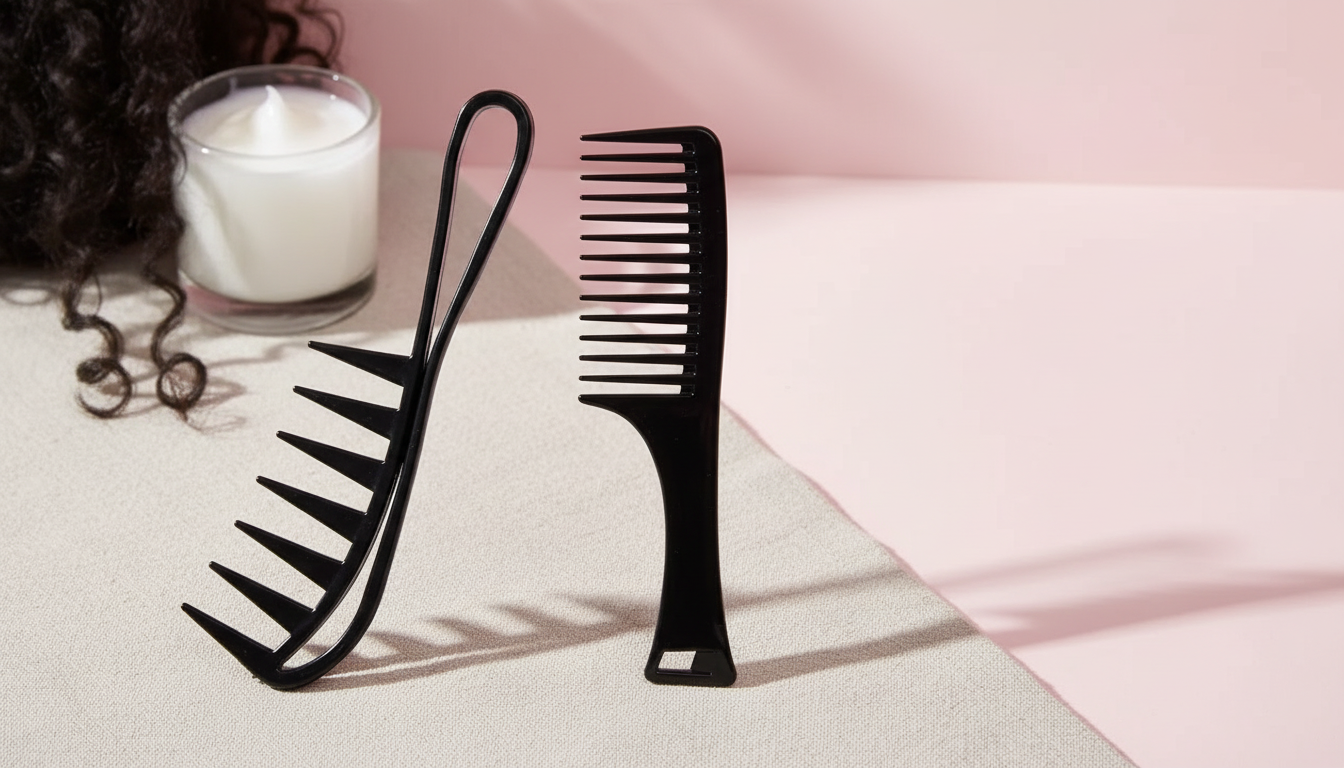
Black Wide-Tooth Comb Set for Natural Hair and Real Hair Wigs
A wide-tooth comb set helps detangle curls, coils, and textured wigs with less snagging and fewer broken strands. With wider spacing between teeth, it’s easier to loosen knots without “raking” through fragile bends in the hair. Below is a practical guide to what makes a good wide-tooth comb, how to use it on natural hair and real-hair wigs, and simple care habits that keep both hair and tools in great shape.
What a Wide-Tooth Comb Set Does Best
- Detangles with wider spacing to reduce pulling on knots and shed hairs.
- Supports curl definition by separating without over-frizzing.
- Works well for wet detangling when paired with conditioner or a detangling spray.
- Helps distribute leave-in products through thicker sections.
- A set offers flexibility: keep one in the shower, one in a bag, one for wig care.
If detangling usually turns into a long session (or a painful one), a wide-tooth comb is often the simplest swap that changes the experience. For everyday hair care basics and gentle handling tips, the American Academy of Dermatology Association emphasizes minimizing unnecessary pulling and using the right technique to reduce damage.
Why Natural Hair Often Prefers Wider Teeth
- Curly and coily patterns form bends that tangle more easily; wide teeth move through clusters instead of slicing through them.
- Less tension at the root can help minimize breakage during detangling sessions.
- Better for preserving clumps when styling twist-outs, braid-outs, and wash-and-gos.
- Useful for lifting and fluffing at the roots with less disruption to the ends.
Breakage is often a technique-and-friction problem rather than a “hair type” problem. Over-combing, detangling without enough slip, and forcing tools through tight knots can all contribute. The Cleveland Clinic notes that mechanical stress is a common contributor to hair breakage—making gentle tools and patient sectioning especially important.
Using a Wide-Tooth Comb on Real Hair Wigs
- Start at the ends and work upward in small sections to avoid stressing the cap and knots.
- Hold hair above the area being combed to reduce tension on the wig base.
- Detangle before washing to limit matting during cleansing.
- For curly or body-wave wigs, comb less frequently and rely on fingers for daily refreshes.
- Avoid aggressive combing near lace fronts; use light pressure and short strokes.
Real hair wigs can be surprisingly delicate at the base. The goal isn’t just to remove tangles—it’s to protect the lace, knots, and ventilation that keep the wig looking natural. A wide-tooth comb helps because it allows you to “open” tangles gradually, instead of catching and yanking at the foundation.
Detangling Steps That Reduce Snagging
- Prep: add slip with conditioner (natural hair) or a wig-safe detangler (real hair wigs).
- Section: divide hair into 4–8 sections and secure each section.
- Ends first: gently loosen knots at the tips before moving upward.
- Pause on tangles: add more slip and use fingers to separate before combing.
- Finish: smooth with a light leave-in or serum to reduce re-tangling.
A helpful checkpoint: if the comb stops, treat it like a “knot alert,” not a signal to push harder. Add more product, switch to finger-detangling for that spot, then return to the comb once the section feels looser.
Comb Set Features to Look For
- Rounded tooth tips to help prevent scratching the scalp and snagging strands.
- Sturdy material that doesn’t flex too much under tension.
- Comfortable grip for longer detangling sessions.
- Wide spacing suitable for thick curls, coils, and dense wigs.
- Easy-to-clean surface to reduce product buildup and residue transfer.
Quick Guide to Matching a Wide-Tooth Comb to the Task
| Task | Best Approach | Helpful Pairing |
|---|---|---|
| Wet detangling natural hair | Wide teeth, slow passes, small sections | Conditioner with strong slip |
| Refreshing curls on day 2–4 | Finger-detangle first; comb only if needed | Water + leave-in mist |
| Straight or blowout maintenance | Comb from ends with light tension | Heat protectant (before styling) + serum (after) |
| Real hair wig detangling | Support hair above combing area; avoid yanking near lace | Wig-safe detangler + wide-tooth comb |
| Product distribution | Comb through once after applying | Leave-in conditioner or cream |
Care and Cleaning for Combs (and Why It Matters)
When to Swap Tools Instead of Forcing a Comb Through
Product Spotlight: Black Wide-Tooth Comb Set
Black Wide-Tooth Comb Set for Natural Hair & Real Hair Wigs is an easy upgrade when detangling needs to be gentler, faster, and more consistent across natural hair days and wig-care days.
More In-Stock Finds
- Amazing Song Pudding Bag
- Ride On Push Car for Toddlers
- 1:14 Scale RC Excavator with 22 Channels and 680° Rotation
FAQ
Is a wide-tooth comb better than a brush for natural hair?
A wide-tooth comb is often a safer default for detangling because it reduces snagging and tension, especially on wet or conditioned hair. Some brushes can work well for specific styling goals, but gentle combing with enough slip is typically easier on curls and coils.
Can a wide-tooth comb be used on a real hair wig without damaging the lace?
Yes—use a light hand, start at the ends, and support the hair near the base to limit stress on the lace and knots. Detangling frequency depends on texture: tighter curls usually do better with more finger-detangling and less combing.
Should hair be detangled wet or dry with a wide-tooth comb?
Many people get the least breakage when detangling wet hair with conditioner for extra slip, though some prefer damp or stretched hair. For real hair wigs, detangling dry or slightly damp before washing can help prevent matting during cleansing.








Leave a comment