-
Shop
- Adidas
- Advanced Technologies
- AI Skills for Creators & Freelancers
- AI Client Management
- AI Ethics
- AI Mindset
- AI Tools & Prompts
- AI Writing & Content Creation
- Audio, Voice & Music
- Design & Visual Creation
- Email, Messaging & Communication
- Freelancing & Business
- Marketing, Ads & Conversion
- Productivity, Workflow & Automation
- SEO & Search Optimization
- Social Media Content & Growth
- Strategy, Planning & Analytics
- Video Creation & Editing
- Beauty
- Best-Sellers
- Car Accessories
- Car Buying & Ownership
- Confidence
- Dating & Social Skills
- Digital Resources
- Education & Learning
- Family & Parenting
- Fashion
- Accessories
- Alexander McQueen
- Bags
- Bags & Wallets
- Balenciaga
- Belts
- Blazers
- Bottega Veneta
- Brunello Cucinelli
- Burberry
- Chanel
- Chloé
- Dior
- Dolce & Gabbana
- Dresses
- Etro
- Fendi
- Gucci
- Hats & Hair Accessories
- Hoodies & Sweatshirts
- Jewelry
- Jil Sander
- Keychains
- Kiton
- Luggage
- Miu Miu
- Off-White
- Outerwear
- Prada
- Rick Owens
- Saint Laurent
- Shoes
- Socks & Tights
- Sweaters & Cardigans
- The Row
- Tom Ford
- Tops & Shirts
- Valentino
- Valentino Garavani
- Versace
- Vivienne Westwood
- Watches
- Fashion Accessories
- Furniture
- Gadgets
- Health & Beauty
- Health & Wellness
- Home & Garden
- Home Styling & Organization
- Home Supplies
- Kids & Babies
- Kitchen Best-Sellers
- Parenting & Child Development
- Patio, Lawn & Garden
- Personal Growth
- Personal Style & Fashion
- Pet Care
- Pet Lifestyle & Wellness
- Pet Supplies
- Pets
- Smart Home Living Guides
- Sport & Outdoors
- Stress Relief & Relaxation
- Super Deals
- Travel
- Travel & Adventure
- Wealth
- Wellness
Non-Stick Silicone Spatula: Cook, Bake & Grill Easier
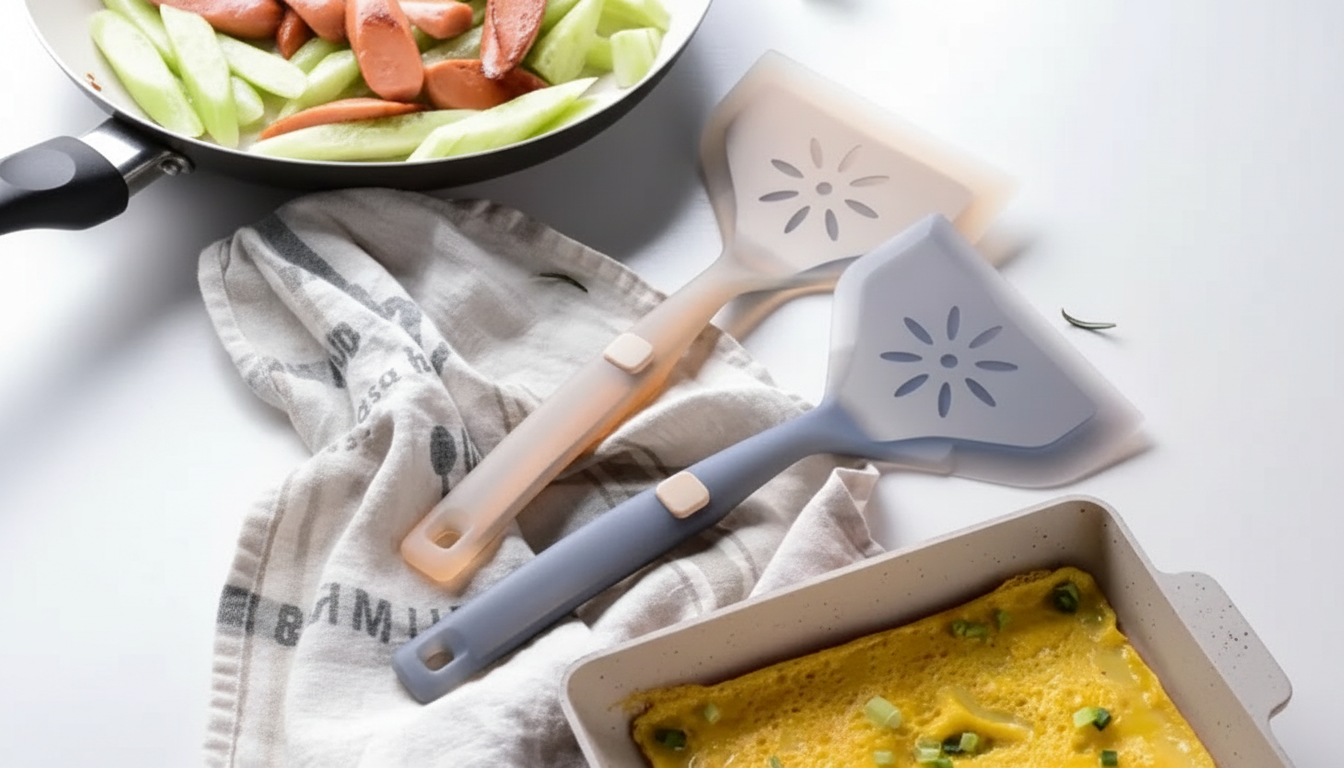
Non-Stick Silicone Spatula for Cooking, Baking & Grilling: One Tool for Everyday Heat and Mess
A dependable spatula should glide under food, protect non-stick surfaces, and handle everything from cookie dough to grill-side flipping. Silicone spatulas are popular because they’re gentle on coated cookware, easy to rinse clean, and versatile enough to move from stovetop to mixing bowl to serving tray without switching tools. Below is what actually matters when choosing a silicone spatula, where it performs best, and how to keep it looking (and smelling) fresh for the long haul.
What Makes a Silicone Spatula Truly Non-Stick-Friendly
The biggest advantage of silicone is how it treats delicate cookware. A quality silicone edge helps you cook confidently on non-stick pans without worrying about scraping off a coating or leaving metal marks behind.
- Scratch-safe contact: Silicone won’t scratch most non-stick coatings, making it a safer choice than metal edges for everyday flipping and stirring.
- Helpful flex where you need it: A slightly flexible edge can slide under eggs, fish, pancakes, and cookies without tearing or crushing them.
- Heat resistance that matches real cooking: Heat rating determines whether the head stays firm near hot pan rims or grill-side heat without softening or warping.
- Fewer seams, fewer mess traps: One-piece designs (or a tightly bonded head) reduce gaps where grease, batter, and dishwater can collect.
Where It Shines: Cooking, Baking, and Grilling
Silicone spatulas earn their spot because they cover a lot of ground. Instead of owning a different tool for every task, one dependable spatula can do most of what home cooks reach for daily.
Cooking
- Flip eggs, omelets, and pancakes without scraping the pan surface.
- Turn sautéed vegetables and soft foods cleanly, even when they’re sticking slightly.
- Handle fragile fillets with less tearing than a stiff, sharp-edged turner.
Baking
- Fold batter and scrape bowls clean so ingredients actually make it into the pan.
- Smooth frosting, fillings, or ganache with a surface that releases sticky mixtures more easily than porous tools.
- Work cookie dough and thick mixes without needing a separate scraper.
Grilling
- Move foods on grill mats or trays without scratching surfaces.
- Turn vegetables and manage skewers with more control than tongs for small pieces.
- Serve directly from a tray or pan without leaving scuffs behind.
Quick Comparison: Common Spatula Materials
Material choice comes down to cookware type, heat exposure, and whether your tasks are delicate (like flipping fish) or heavy (like lifting burgers). Silicone tends to be the safest all-around match for non-stick cookware; metal can be excellent for crisp sears on cast iron or steel, but it’s also the easiest way to damage coatings.
| Material | Best for | Limitations |
|---|---|---|
| Silicone | Non-stick pans, baking bowls, gentle flipping | Can feel less rigid for very heavy lifting if core is soft |
| Metal | Thin-edge scraping and crisp flipping on cast iron/steel | Can damage non-stick coatings; may chip enamel |
| Nylon | Budget-friendly non-stick use | Often lower heat tolerance; edges can deform over time |
| Wood | Stirring, serving, light flipping | Can absorb moisture/odors; not ideal for scraping bowls clean |
Details That Matter When Buying
Two silicone spatulas can look similar but behave differently once you start cooking. These details decide whether the tool becomes a go-to or ends up stuck in the back of a drawer.
- Core strength: A reinforced internal core improves lifting and control while keeping a soft silicone edge against cookware.
- Edge shape: A thinner leading edge slides under food more easily; a wider face supports larger portions when transferring to plates.
- Handle comfort: Look for a grip that stays steady with wet hands and a length that keeps fingers farther from heat and splatter.
- Cleaning approach: Dishwasher-safe tools simplify cleanup, and one-piece builds are typically easiest to sanitize thoroughly.
- Storage: Hanging loops, hooks, or slim profiles help keep utensil crocks and drawers organized (and keep the head from getting bent).
Care, Cleaning, and Safety Basics
Silicone is low-maintenance, but it still benefits from a few habits that reduce odors and keep the surface smooth. For general cleanability and sanitation principles, the FDA Food Code and the USDA cleaning and sanitizing basics are useful references.
A Practical Pick for Daily Use
If the goal is one tool that covers weekday breakfast, weekend baking, and quick grill-side serving, the Non-Stick Silicone Spatula for Cooking, Baking & Grilling fits the job with a non-scratch silicone surface and an easy-to-clean build. It’s a simple upgrade for worn utensils and a budget-friendly addition for a first kitchen setup, especially if you cook often on non-stick pans and want a spatula that stays gentle while still being useful across multiple tasks.
More In-Stock Picks You Can Add to Your Cart
FAQ
Is a silicone spatula safe to use on non-stick cookware?
Yes—silicone is typically non-scratch and is a preferred material for coated pans. Just avoid using any tool with damaged, sharp, or torn edges that could drag or catch on the coating.
Can a silicone spatula handle high heat on the grill?
It depends on the product’s heat rating. Many silicone tools handle common cooking temperatures well, but it’s best to avoid direct flame and prolonged contact with extremely hot metal surfaces unless the spatula is specifically rated for that use.
Why does my silicone spatula sometimes hold onto odors or stains?
Oils and strong pigments (like curry, garlic, or tomato sauce) can cling to the surface film, especially if the utensil sits unwashed. Prompt washing helps; for stubborn smells, try a warm soak with dish soap or a baking soda solution—some staining is cosmetic and doesn’t affect performance.
Recommended for you
Was this article helpful?
Yes
No







Leave a comment