-
Shop
- Adidas
- Advanced Technologies
- AI Skills for Creators & Freelancers
- AI Client Management
- AI Ethics
- AI Mindset
- AI Tools & Prompts
- AI Writing & Content Creation
- Audio, Voice & Music
- Design & Visual Creation
- Email, Messaging & Communication
- Freelancing & Business
- Marketing, Ads & Conversion
- Productivity, Workflow & Automation
- SEO & Search Optimization
- Social Media Content & Growth
- Strategy, Planning & Analytics
- Video Creation & Editing
- Beauty
- Best-Sellers
- Car Accessories
- Car Buying & Ownership
- Confidence
- Dating & Social Skills
- Digital Resources
- Education & Learning
- Family & Parenting
- Fashion
- Accessories
- Alexander McQueen
- Bags
- Bags & Wallets
- Balenciaga
- Belts
- Blazers
- Bottega Veneta
- Brunello Cucinelli
- Burberry
- Chanel
- Chloé
- Dior
- Dolce & Gabbana
- Dresses
- Etro
- Fendi
- Gucci
- Hats & Hair Accessories
- Hoodies & Sweatshirts
- Jewelry
- Jil Sander
- Keychains
- Kiton
- Luggage
- Miu Miu
- Off-White
- Outerwear
- Prada
- Rick Owens
- Saint Laurent
- Shoes
- Socks & Tights
- Sweaters & Cardigans
- The Row
- Tom Ford
- Tops & Shirts
- Valentino
- Valentino Garavani
- Versace
- Vivienne Westwood
- Watches
- Fashion Accessories
- Furniture
- Gadgets
- Health & Beauty
- Health & Wellness
- Home & Garden
- Home Styling & Organization
- Home Supplies
- Kids & Babies
- Kitchen Best-Sellers
- Parenting & Child Development
- Patio, Lawn & Garden
- Personal Growth
- Personal Style & Fashion
- Pet Care
- Pet Lifestyle & Wellness
- Pet Supplies
- Pets
- Smart Home Living Guides
- Sport & Outdoors
- Stress Relief & Relaxation
- Super Deals
- Travel
- Travel & Adventure
- Wealth
- Wellness
16-Panel Heavy Duty Dog Playpen: Lockable Door Safety
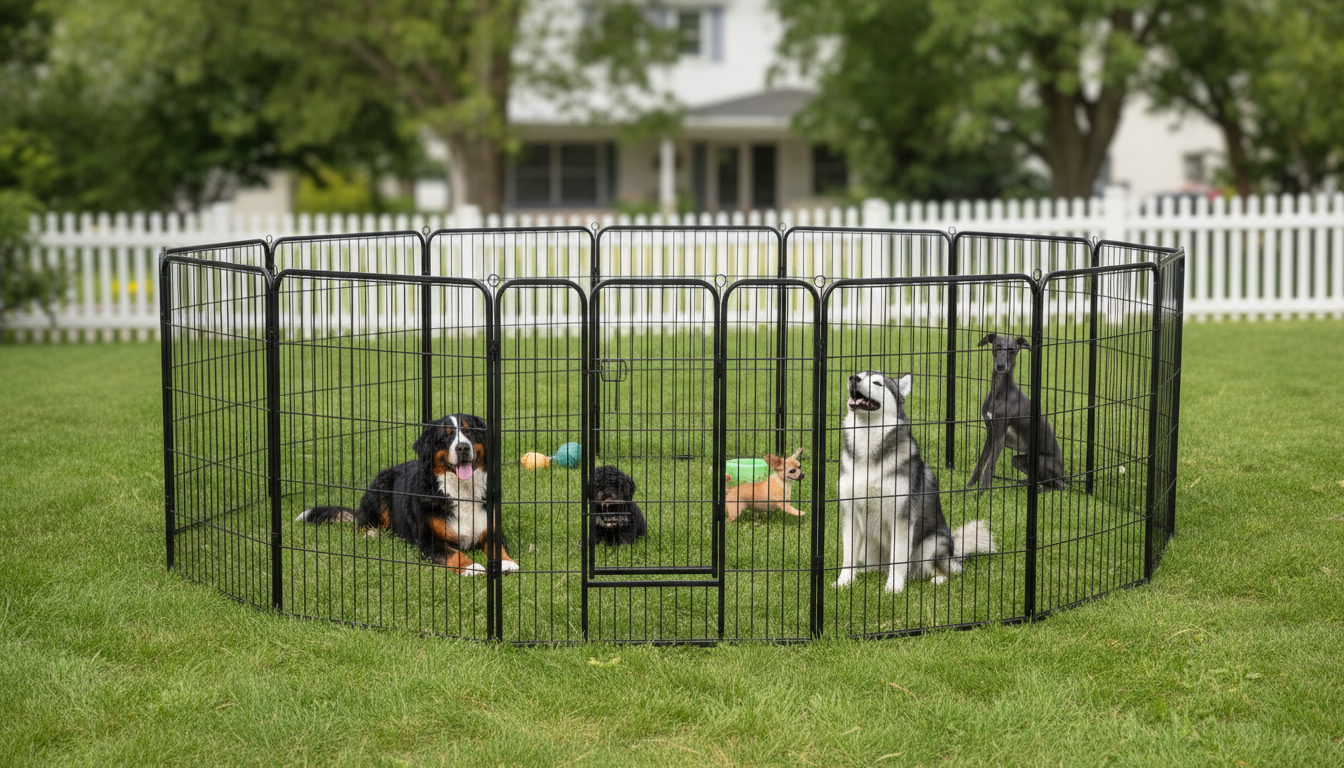
16-Panel Heavy Duty Dog Playpen with Lockable Door: Secure Space Indoors or Out
A sturdy panel playpen creates a defined, safe area for training, downtime, or supervised outdoor play. This 16-panel heavy duty design adds a lockable door for quick access and more reliable containment—useful for energetic dogs, multi-pet homes, and busy routines. Whether it’s a puppy learning boundaries or an adult dog who needs a predictable “place” during meals, deliveries, or guests, a durable panel pen helps keep everyday life calmer and safer.
What a Heavy Duty Panel Playpen Helps With
- Creates a designated boundary for puppies learning house rules and routines
- Provides a controlled space for rest, feeding, and enrichment when direct supervision isn’t possible
- Helps manage introductions between pets by allowing gradual, calm proximity
- Gives an alternative to crating when more room to move is preferred
- Supports outdoor time on patios or yards when paired with supervision and shade/water
For households balancing training and real-world schedules, a playpen acts like a “middle option” between total freedom and a crate. It can also reduce rehearsed bad habits—like counter-surfing or chewing cords—by limiting access during the learning phase. For general care and safety guidance, the ASPCA’s dog care resources are a helpful reference point.
Key Features That Matter Most
- Lockable door: reduces accidental escapes and makes entry/exit easier without lifting panels
- Heavy duty panels: improved stability for larger dogs or dogs that push, paw, or lean on barriers
- Modular layout: panels can be arranged into different shapes to fit rooms, decks, or yard areas
- Multiple connection points: helps keep corners tight and reduces gaps that small dogs may squeeze through
- Portable setup: breaks down into panels for repositioning and storage between uses
A lockable door is especially valuable for daily routines. Instead of stepping over panels (which can shift the setup and create escape gaps), you can use the door for feeding, cleaning, and training reps—then re-secure the latch in one smooth motion.
Layout Ideas for Different Homes and Pets
- Rectangle along a wall: maximizes open floor space while keeping a long play area
- Corner setup: uses two walls for added stability and creates a calm “den-like” zone
- Wide circle/oval: increases usable interior space and reduces corner pacing for some dogs
- Short “gate” run: use fewer panels as a barrier to block off a hallway or doorway area
- Two-zone management: split space for feeding on one side and rest on the other (when size allows)
Quick layout planner (16 panels)
| Setup | Best for | Practical notes |
|---|---|---|
| Rectangle (long run) | Medium/large dogs that pace or play | Anchor one long side to a wall if possible; keep door facing a clear walkway |
| Square/compact pen | Apartments, tight rooms | Less footprint; add a designated chew station to reduce boredom |
| Circle/oval | Dogs that circle corners or get stuck on turns | Smoother movement; ensure panel connections stay snug to prevent gaps |
| Half-pen as a barrier | Blocking off unsafe areas | Use fewer panels; check stability if pets may jump or climb |
Using the Lockable Door Safely and Conveniently
- Confirm the latch is fully engaged each time—especially after guests, kids, or deliveries
- Position the door so it opens toward a clear path to reduce tripping and rushed exits
- Train a “wait” at the doorway to reduce bolting and door-dashing
- Avoid leaving collars that can snag on hardware when unsupervised; use a breakaway option if appropriate
- For high-energy dogs, pair the pen with enrichment (lick mats, puzzle feeders, safe chews) to reduce pushing at panels
If a dog tests boundaries, consistency matters more than intensity. Calmly return them to the pen, reward quiet behavior, and make the space worth choosing (a chew, a puzzle feeder, or a favorite toy). For training structure that complements safe confinement, the American Kennel Club’s crate training guidance includes principles that also apply to playpens—predictable routines, short sessions, and rewarding calm.
Indoor vs. Outdoor Placement
For warmer months, outdoor pen time should always account for heat and ground temperature. The AVMA’s hot weather safety tips are a practical checklist for avoiding overheating and burned paw pads.
Care, Maintenance, and Longevity
Product Spotlight: 16-Panel Heavy Duty Dog Playpen with Lockable Door
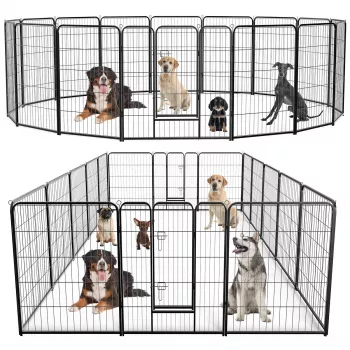
The 16-Panel Heavy Duty Dog Playpen with Lockable Door is built for flexible setups in living rooms, patios, and designated pet zones. The lockable door supports quick access for feeding, cleaning, and training routines, while the heavy duty panel design offers a sturdier alternative to lightweight fabric pens or low gates.
More in-stock finds
- Amazing Song Pudding Bag (a handy carry/storage option for organizing small essentials)
FAQ
Is a heavy duty panel playpen better than a crate?
A playpen typically gives more room to stand, turn, and stretch, which can be useful for supervised downtime and controlled play. Crates can be better for travel and some house-training routines, and many homes use both depending on the situation and what the dog finds most settling.
How do you keep a dog from escaping a panel playpen?
Check the latch every time, position the pen against a wall or in a corner for stability, and remove nearby furniture that could act like a step for climbing. Adding enrichment can also reduce panel-pawing, and choosing a height/strength that matches the dog’s size and determination is key.
Can a panel playpen be used outdoors every day?
Yes, with supervision and the right setup: shade, fresh water, and temperature-safe surfaces are essential. Bring it inside during bad weather and dry/clean it regularly to protect hardware and keep the door latch working smoothly.
Recommended for you

Was this article helpful?
Yes
No







Leave a comment