-
Shop
- Adidas
- Advanced Technologies
- AI Skills for Creators & Freelancers
- AI Client Management
- AI Ethics
- AI Mindset
- AI Tools & Prompts
- AI Writing & Content Creation
- Audio, Voice & Music
- Design & Visual Creation
- Email, Messaging & Communication
- Freelancing & Business
- Marketing, Ads & Conversion
- Productivity, Workflow & Automation
- SEO & Search Optimization
- Social Media Content & Growth
- Strategy, Planning & Analytics
- Video Creation & Editing
- Beauty
- Best-Sellers
- Car Accessories
- Car Buying & Ownership
- Confidence
- Dating & Social Skills
- Digital Resources
- Education & Learning
- Family & Parenting
- Fashion
- Accessories
- Alexander McQueen
- Bags
- Bags & Wallets
- Balenciaga
- Belts
- Blazers
- Bottega Veneta
- Brunello Cucinelli
- Burberry
- Chanel
- Chloé
- Dior
- Dolce & Gabbana
- Dresses
- Etro
- Fendi
- Gucci
- Hats & Hair Accessories
- Hoodies & Sweatshirts
- Jewelry
- Jil Sander
- Keychains
- Kiton
- Luggage
- Miu Miu
- Off-White
- Outerwear
- Prada
- Rick Owens
- Saint Laurent
- Shoes
- Socks & Tights
- Sweaters & Cardigans
- The Row
- Tom Ford
- Tops & Shirts
- Valentino
- Valentino Garavani
- Versace
- Vivienne Westwood
- Watches
- Fashion Accessories
- Furniture
- Gadgets
- Health & Beauty
- Health & Wellness
- Home & Garden
- Home Styling & Organization
- Home Supplies
- Kids & Babies
- Kitchen Best-Sellers
- Parenting & Child Development
- Patio, Lawn & Garden
- Personal Growth
- Personal Style & Fashion
- Pet Care
- Pet Lifestyle & Wellness
- Pet Supplies
- Pets
- Smart Home Living Guides
- Sport & Outdoors
- Stress Relief & Relaxation
- Super Deals
- Travel
- Travel & Adventure
- Wealth
- Wellness
4-Gallon Battery Backpack Sprayer + Cart: Steady, Easy Spray

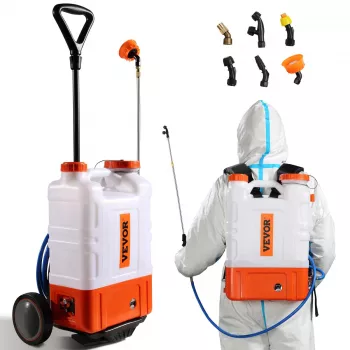
Battery-Powered Backpack Sprayer with Cart: Why This 4-Gallon Setup Fits Real Yard Work
A cart-equipped, battery-powered backpack sprayer helps cover lawns, beds, fences, and hardscape edges with less pumping and fewer refills. Adjustable pressure and interchangeable nozzles make it easier to switch between gentle foliar misting and targeted spot treatments while keeping a steady spray pattern over longer sessions. For homeowners and DIY property managers, that combination can turn “start-stop” spraying into a smoother, more controlled routine.
What This Sprayer Setup Is Designed to Do
- Handle medium-size property work where hand-pumping becomes tiring: lawns, shrubs, perimeter treatments, and fence lines
- Support different application styles with adjustable pressure for delicate leaves or heavier spray for ground coverage
- Reduce strain with a cart option when a full 4-gallon tank feels heavy on the back
- Improve consistency versus manual sprayers by maintaining steady output during continuous spraying
Key Features That Change Day-to-Day Use
- 4-gallon tank capacity: fewer stops to mix and refill compared with smaller handheld sprayers
- Battery-powered operation: minimizes fatigue and helps maintain consistent pressure during longer passes
- Adjustable pressure control: dial in output to match the chemical label directions and the surface being treated
- Multi-nozzle options: switch spray patterns for broad coverage, edging, or spot work without improvising technique
- Cart support: roll the tank across walkways and larger yards when carrying a full load is uncomfortable
Pressure and Nozzle Selection for Common Tasks
The fastest way to get better results (and use less product) is matching spray pattern and pressure to the job. A fine pattern at lower pressure can help reduce drift around plants, while a more focused stream improves placement in cracks and along edges.
- Foliar applications: use lower pressure and a finer pattern to reduce leaf damage and drift
- Ground and mulch treatments: moderate pressure helps coat surfaces more evenly without overspray
- Edging and cracks: a more focused pattern at controlled pressure improves placement and reduces waste
- Spot treatment: start low, test on a small area, then increase only if coverage is insufficient
- Always follow the product label for dilution rate, application method, and any required personal protective equipment
Quick Setup Guide: Task-to-Spray Approach
| Task | Suggested spray pattern | Pressure approach | Practical tip |
|---|---|---|---|
| Leafy plants and shrubs | Fine mist / gentle fan | Low to medium | Spray with the wind at the back to reduce blowback onto clothing |
| Lawn perimeter and fence line | Fan pattern | Medium | Walk a consistent pace for even coverage |
| Cracks, pavers, and edges | Stream / narrow pattern | Low to medium | Aim close to the target to limit drift |
| General ground coverage | Wide fan | Medium | Overlap passes slightly to avoid striping |
Comfort, Mobility, and Load Management
A full 4-gallon tank is a meaningful load. The advantage of a cart-backpack combination is flexibility: carry it where rolling is awkward, then switch to the cart where distance and flat ground make rolling easier.
- A full 4-gallon load is substantial; the cart option helps reduce back and shoulder fatigue on larger properties
- When wearing as a backpack, tighten straps so the tank sits high and stable to minimize sloshing
- Plan a route before spraying to avoid dragging hoses through treated areas and to keep footing secure
- Use the cart on uneven terrain carefully; avoid steep slopes where rolling equipment can tip
Mixing, Application, and Cleanup Basics
- Mix only what is needed for the job; over-mixing increases storage and disposal risks
- Add water first when appropriate, then the product, then top off to reduce foaming and improve mixing
- Keep the nozzle height low and use the lowest effective pressure to reduce drift
- After use, rinse the tank, wand, and nozzles; run clean water through the system to prevent clogging
- Store chemicals in original containers and store the sprayer empty, clean, and dry
Safety Notes for Yard and Garden Spraying
Even “routine” lawn and garden treatments can create exposure risks if applied carelessly. Follow label directions and keep protective gear consistent from job to job. For additional guidance, review EPA pesticide safety resources and OSHA guidance on personal protective equipment.
- Wear label-recommended protection such as gloves and eye protection; some products also require a respirator
- Avoid spraying in windy conditions and keep children and pets away until the label re-entry interval has passed
- Do not use the same sprayer for herbicides and edible plants unless the sprayer is dedicated and clearly labeled
- Never mix chemicals unless the label explicitly allows it; incompatible mixes can be hazardous
- Dispose of rinse water and unused mixes according to the product label and local regulations
When a Cart-Backpack Combination Makes Sense
Product Snapshot
- Battery-Powered Backpack Sprayer with Cart – 4 Gal, Adjustable Pressure, Multi-Nozzle
- Intended for flexible yard and garden applications with controlled output and multiple spray patterns
- Suitable for users who want a balance of portability and roll-along convenience
More In-Stock Picks
FAQ
Can the same sprayer be used for herbicides and fertilizers?
Best practice is to dedicate one sprayer to herbicides to prevent residue carryover. If switching uses, clean thoroughly, consider keeping separate nozzles, and label the sprayer clearly.
How should pressure be set to reduce drift?
Use the lowest pressure that still achieves adequate coverage, and keep the nozzle close to the target. Drift control also depends on nozzle pattern and weather, so avoid spraying in wind.
What maintenance helps prevent clogging and uneven spray?
Rinse after every use, flush clean water through the wand and nozzle, and clean strainers if present. Store the unit dry and replace worn nozzles if the spray pattern becomes irregular.
Recommended for you


Was this article helpful?
Yes
No








Leave a comment